
Accepting online payments on your website, e-commerce store or booking platform lets you collect payment at the time of the order, automate confirmation and invoicing, and give your customers a frictionless checkout, including on mobile. But payment integration is not just a matter of "adding a button": it involves a payment service provider, your bank, your website and your management tools.
This guide is not a comparison of providers. It is a method for preparing, building, securing and maintaining the integration of an online payment solution. It is written for owners and managers of small businesses, SMEs and organizations, in Morocco and internationally. Unziptech, a software engineering company based in Fez, designs, develops and maintains web, mobile and business applications; payment integration is one of the topics we handle in our e-commerce website and online booking software projects.
The Benefits of Online Payments for Merchants and Businesses
For merchants, online stores and service businesses, online payments offer several concrete benefits:
- Payment at the time of the order: fewer reminders and fewer no-shows, especially for bookings.
- Automation: confirmation, invoices and stock or schedule updates triggered by the payment status.
- Always available: your customers can buy or book at any time, from a computer or a smartphone.
- Trust: a clear, secure checkout that is consistent with your brand reassures consumers.
- Useful data: transaction tracking that helps you understand your customers' buying habits.
These benefits, however, depend on the quality of the integration: a slow, confusing or poorly mobile-optimized checkout can have the opposite effect.
Quick Checklist: Are You Ready for Online Payments?
Before contacting a payment provider, check the following points:
- Legal entity and business bank account: ask your bank and the provider which documents are required to open an acceptance agreement (merchant account).
- Clear business model: selling products, providing services, subscriptions, bookings or rentals? The type of transaction shapes the rest of the project.
- Target currencies and markets: Moroccan dirham, euro or other currencies, local or international customers.
- Transaction types: one-time payment, deposit then balance, recurring payment, pre-authorization, partial refund.
- Up-to-date legal pages: legal notice, terms and conditions of sale, privacy policy, cancellation and refund terms. The processing of personal data must comply with Law 09-08 and the requirements of the CNDP (Morocco's data protection authority).
- Website on HTTPS: a valid SSL certificate on every page, before any integration.
- Requirements document: formalize these points in a website requirements document.
If any of these points is still unclear, clarify it before choosing a solution: this is often where delays arise.
How Online Payment Works on a Website
For the customer, paying takes a few seconds. Behind the scenes, several parties are involved:
- the customer, who pays by bank card or another available payment method;
- your website or app, which creates the order and displays the payment form;
- the payment gateway of the payment service provider (PSP), which forwards the request;
- the customer's bank, which authorizes or declines the transaction;
- the merchant's bank (acquirer), which receives the funds under the terms of your agreement.
The standard flow: the customer confirms their cart, the payment details are entered on a secure page, the authorization request is sent, the response comes back in real time, then your website receives a confirmation and updates the order. Funds are paid out according to the schedule defined in your agreement with the provider and the bank.
There are two main integration methods:
- Hosted payment page (redirect): the customer enters their details on the provider's page and then returns to your website. This is generally simpler to implement and limits your exposure to card data.
- Embedded form (iframe, component or API): the payment stays visually within your website. The experience is smoother, but the integration and security obligations require more work.
In both cases, reliable confirmation comes from a server-to-server notification (webhook or notification URL), not from the browser redirect alone. Accounting reconciliation can be done from the provider's back office or through an API integration with your invoicing tool or ERP.
Defining Your Payment Needs: E-commerce, Booking, SaaS, B2B
The choice of payment methods and architecture depends on your model:
- E-commerce website: immediate payment at checkout; if you also offer cash on delivery, plan an order status for each case.
- Booking or rental platform: deposits, balance, possible pre-authorization, cancellations and refunds according to your terms.
- SaaS and subscriptions: recurring payments, handling of failed payments, reminders and plan changes.
- B2B or high-value orders: bank transfer, invoicing with payment terms, quote converted into an order.
Average order value, purchase frequency and your customer profile (individuals or businesses, local or international) guide the choice. A few well-integrated options are better than many poorly maintained ones.
Choosing Your Payment Methods: Cards, Mobile and Other Solutions
- Bank cards (Visa, Mastercard, Moroccan cards): the foundation of most online stores. Check with the provider which networks and which cards, local and foreign, are accepted.
- Wallets and mobile payments (Google Pay, Apple Pay, other wallets): often recommended alongside bank cards to make the mobile user experience smoother.
- Actual availability: access to these options depends on the provider, the country and your agreement; ask what is actually offered for your business.
- Bank transfer and deferred payment: useful for B2B or large amounts, with manual or automated tracking of incoming payments.
Key Points for an Online Store in Morocco
In Morocco, the Centre Monétique Interbancaire (CMI) is the reference player for accepting Moroccan bank cards, and many banks and providers offer online payment solutions for e-commerce. International solutions such as PayPal can reassure foreign customers, while others, such as Stripe, require a company registered in an eligible country. These names are given as examples only: Unziptech claims no partnership with these companies, and their terms must be verified directly with them. If some of your customers pay cash on delivery, plan for this flow in your ordering system too, and remember that a messaging app such as WhatsApp is for notifications, not for collecting payments.
The choice of an online payment solution depends in particular on the country where your company is registered, the currencies accepted and each provider's eligibility requirements. These points, along with fees, should be confirmed directly with the provider and your bank.
Questions to Ask a Payment Provider (Comparison Table)
Comparing providers is not just about price. Use this table to record each provider's answers:
| Question to ask | Why it matters | Provider's answer |
|---|---|---|
| Which cards and countries are accepted? | Cover your target customers | To be completed |
| Which mobile payment methods or wallets are available? | Adapt the mobile checkout | To be completed |
| What are the setup, subscription and per-transaction fees? | Anticipate the impact on your margins | To be completed |
| How long does it take for funds to be paid out? | Manage your cash flow | To be completed |
| How do refunds, cancellations and disputes work? | Handle customer cases without getting stuck | To be completed |
| Which integrations: hosted page, API, mobile SDK, CMS plugins? | Check compatibility with your website | To be completed |
| What test environment is provided? | Validate every scenario before launch | To be completed |
| What authentication and anti-fraud measures are in place? | Protect your customers and your revenue | To be completed |
| Which compliance obligations (for example PCI DSS) apply to your integration method? | Know what falls to you and what falls to the provider | To be completed |
Compare at least two or three offers and get the contractual terms confirmed in writing.
Technical Steps to Integrate Payments on Your Website
- Choose the technical approach: an official plugin for your CMS or custom development. Custom software offers more flexibility for complex flows (multiple parties, deposits, subscriptions).
- Open the merchant account and get test access: credentials and keys supplied by the provider, stored securely on the server side.
- Develop the basic integration in a test environment: transaction creation, redirect or form, return to the website.
- Configure return pages and notifications: success, failure and cancellation pages, and handling of the server-to-server notification that updates the order.
- Handle business cases: refunds, cancellations, partial payments, expired orders, duplicates.
- Optimize the checkout flow: short form, clear steps, polished mobile display.
- Integrate mobile: for a mobile app, integrating the provider's SDK is a step in its own right.
At Unziptech, every project follows four stages: needs analysis and a free detailed quote, design with approved mockups, agile development with a demo at each milestone, then delivery with training and maintenance. Payment is addressed from the design stage, not at the end of the project.

Security, Compliance and Customer Data Protection
- HTTPS everywhere: an SSL certificate is essential to secure transactions; it must cover every page, especially the payment page and the customer account area.
- Strong authentication: the 3-D Secure protocol, which asks the cardholder to confirm the payment, helps reduce fraud and chargebacks; ask the provider and the bank which measures apply to your business.
- Card data: do not store card numbers on your servers; let the provider process them according to the chosen integration method and check your compliance obligations with them.
- Personal data: your customers' names, emails and phone numbers must be processed in accordance with Law 09-08 and the requirements of the CNDP.
- Development best practices: at Unziptech, automated testing, code review, OWASP best practices and security updates. To go further, read our guide to web security best practices.
Testing, Launching and Monitoring Your Payments
- Test environment: use the scenarios supplied by the provider and validate each case: payment accepted, declined, authentication requested, abandoned, cancelled, refunded.
- Cross-device testing: desktop, mobile, tablet and the main browsers.
- Notifications: confirmation emails or messages to the customer, new-order alerts, invoices.
- Acceptance testing before go-live: formalize the scenarios and their sign-off, as in software acceptance testing.
- Post-launch monitoring: errors, declines, abandoned payments, reconciliation with the provider's and the bank's statements.
- Maintenance: updates to plugins and libraries, changes in the provider's requirements, new payment methods. See our guide to web application maintenance.
Case Study: RentalMe, a Marketplace with Online Payments
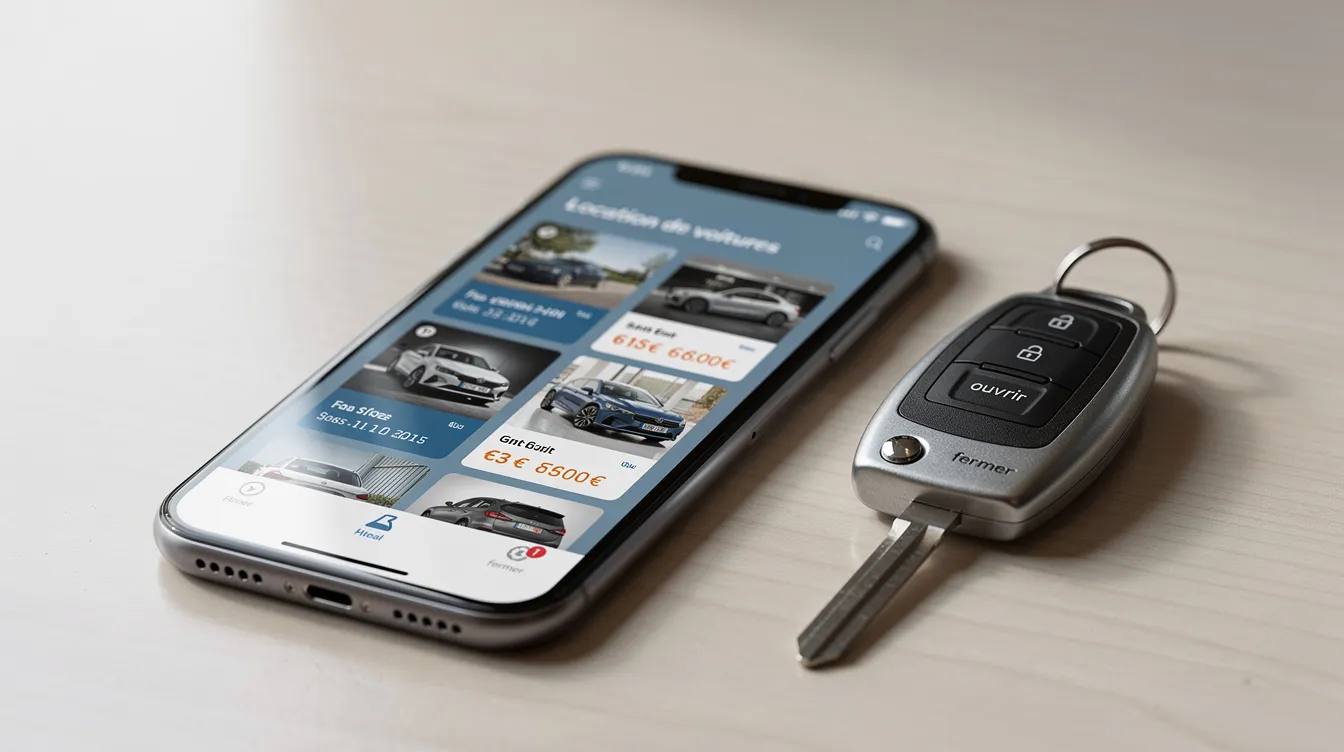
RentalMe (rentalme.ma) is a car rental marketplace designed, developed and maintained by Unziptech. The challenge: enable travelers to compare and book vehicles from local agencies online, with secure payment, anywhere in Morocco. The solution: a complete platform with a public website, an agency portal, a mobile app (web, iOS, Android), a back office, automated invoicing, WhatsApp notifications and online payment through a Moroccan payment service provider, built on a microservices architecture under continuous monitoring.
This kind of project shows why payment must be designed together with the rest of the product: multiple parties, multiple channels, and invoicing and notifications tied to the payment status. Discover our projects and products.
Common Mistakes to Avoid
- Thinking about payment at the end of the project instead of including it in the scope from the design stage.
- Choosing a provider without checking technical compatibility with your website, your hosting and your mobile app.
- Relying solely on the browser redirect to validate an order, without a server-to-server notification.
- Not clarifying fees and terms: currencies, commissions, payout times, refunds.
- Neglecting mobile: a long or poorly displayed checkout makes customers abandon their purchase.
- Launching without complete acceptance testing of every scenario, including refunds.
Online Payment Integration FAQ
How long does it take to integrate online payments? It depends on the website's technology, the provider, the time needed to open the merchant agreement and the complexity of the checkout flow. A reliable estimate can be made after a needs analysis.
Can I accept payments from customers abroad? Check with your bank and your provider which foreign cards and currencies are accepted, as well as the applicable contractual terms.
Do I need to offer every payment method? No. Choose the options that match your customers and that you can maintain properly.
How should I handle refunds? From the provider's back office or via API from your management tool, depending on what the solution allows and the rules set out in the agreement. Plan for this from the design stage.
Do I need a developer? A ready-made plugin may be enough for a simple need. As soon as the checkout flow becomes complex (subscriptions, multiple parties, mobile app, ERP integration), technical support reduces the risks.
Plan Your Project with Unziptech
Online payment integration is a core building block of any digital project: e-commerce website, booking platform, SaaS or mobile app. The steps are clear: define your needs, choose your solution, secure the checkout, test, launch and maintain.
Unziptech supports businesses from analysis to maintenance: web and mobile development, business software, API and payment integration, testing and support. Request a free, detailed quote: we will get back to you within 24 h.