

E-commerce Website: A Guide to Launching Your Online Store as an SME
Are you a business owner thinking about launching your online store? This guide walks you through every step, from initial strategy to launch, so you can build an e-commerce website designed to sell over the long term.
Why Launch an E-commerce Website?
More and more consumers research online before buying: they compare prices and read reviews. For small and medium-sized businesses, this is a real opportunity: an e-commerce website lets you sell goods or services online, without the opening-hour constraints of a physical store. Unlike a simple showcase website, it lets your customers order whenever they want, wherever they are.
Here is what an e-commerce website offers compared with a standard website:
- Continuous sales: your store stays open online, and customers far from your city can buy from you.
- An additional sales channel: the website can complement your existing points of sale, or become your main channel.
- Automation: order management, invoicing, notifications… all tasks that free up time for strategy and customer relationships.
- Data collection: analyzing traffic and sales helps you adjust your offers and launch targeted follow-up campaigns.
Social media also plays a role in purchase decisions: testimonials, user photos and direct conversations build trust.
UNZIPTECH SARL, based in Fez, supports small businesses, SMEs and large companies in Morocco and internationally with e-commerce website and web application development. Its services also cover mobile applications, artificial intelligence, custom software (ERP, CRM) and SaaS solutions.
Defining Your E-commerce Project: Goals, Offer and Positioning
The success of an e-commerce website starts well before technical development. It rests on a clear vision: who are you selling to, what are you selling, and how do you stand out? Skipping this step means risking a website with no direction.
The analyses to carry out first:
- Goals: what order volume are you aiming for? Which geographic areas: local, national, international?
- Customer type: B2C consumers, B2B between businesses, or a mix of both?
- Range and pricing: a broad or specialized catalog? Physical products, services, subscriptions? Competitive or premium positioning?
- Niche and positioning: a well-chosen niche lets you target a specific clientele. Product specialization, service quality, delivery, personalization: every differentiating factor counts.
- Market research: observing competitors, analyzing keywords related to your business, your target's buying habits and the payment methods they prefer.
At UnzipTech, the first phase of every project is precisely to listen to and analyze these elements, in order to build a realistic requirements document that aligns your ambitions, budget and timeline.
Choosing the Right Type of E-commerce Website and the Right Platform
Before choosing a technical solution, clarify the type of website you need:
- A showcase website presents your company and services, without direct sales.
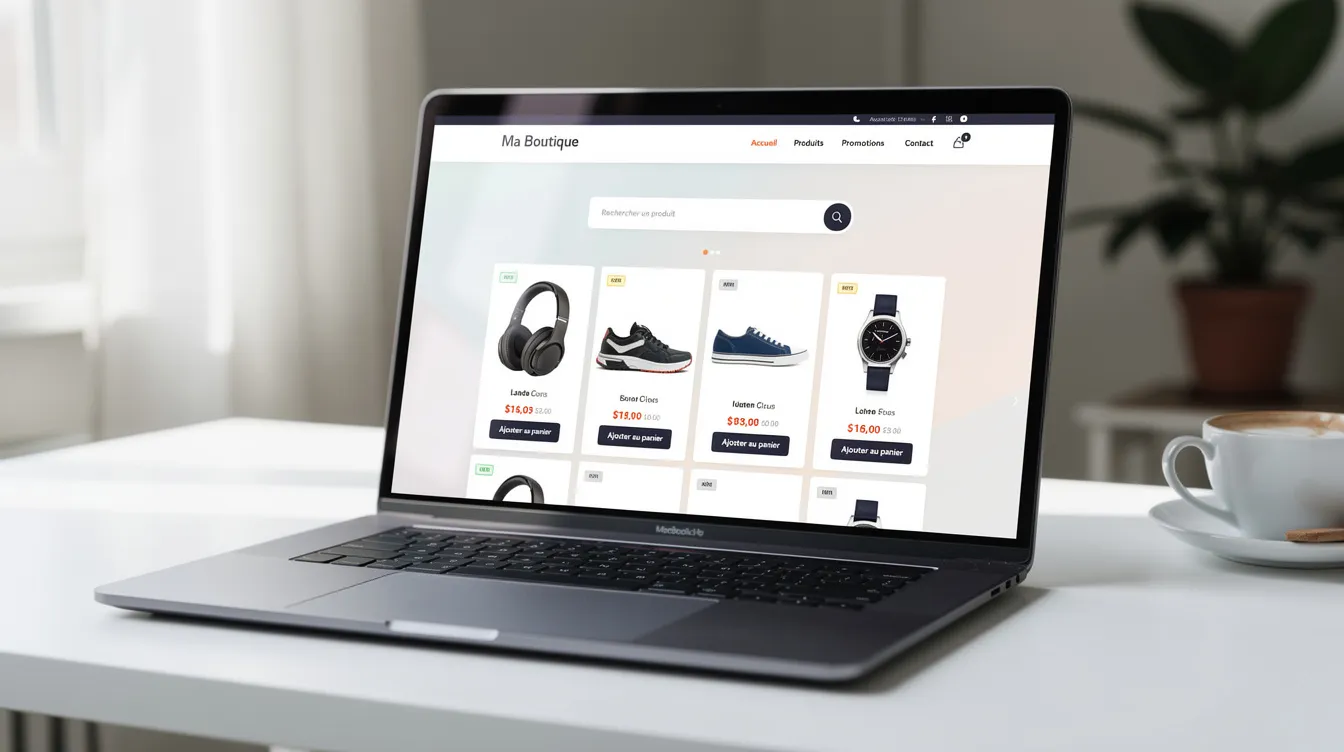
- A full e-commerce website includes a catalog, cart, checkout process and online payment.
- A booking or rental platform requires specific features: calendars, availability, variable pricing.
The main families of technical solutions:
- Self-hosted open source solutions: great flexibility and full control over configuration and future changes. On the other hand, they require technical skills for hosting, maintenance and updates.
- Hosted SaaS solutions: easier to get started with, with updates handled by the vendor. On the other hand, customization is sometimes limited and fees are recurring.
- Custom development: relevant when your processes or integrations go beyond the standard framework (see our article on custom software vs. off-the-shelf solutions).
The choice depends on your context: catalog size, expected traffic, integration needs (ERP, CRM, business tools), international ambitions, multilingual and multi-currency requirements. A small artisan shop does not have the same needs as an industrial B2B SME that manages quotes and restricted access.
UnzipTech advises you on choosing a platform based on your long-term strategy: capacity to grow, internationalization, multi-store setups.
Domain Name, Brand Identity and Site Structure
Your domain name is the foundation of your online brand. It influences your website's credibility, memorability and search rankings.
A few tips for choosing it well:
- Keep it short, related to your business, and easy to pronounce in both French and Arabic.
- Avoid multiple hyphens and overly generic terms.
- Consider including an industry keyword, without over-optimizing.
- Check the availability of the domain and of the matching social media accounts.
Consistency between your domain name, logo, visual identity, tone of voice and social presence builds a strong brand that users recognize on any channel.
Typical structure of an e-commerce website:
- Home page: introduction, featured products, reassurance elements
- Categories: logical organization by theme, use or product type
- Product pages: descriptions, visuals, prices, reviews
- Content pages: FAQ, blog, "about us", terms and conditions of sale, privacy policy, legal notice
- Customer account: order history and tracking
- Business area (if B2B): negotiated prices, quotes
At UnzipTech, the design phase includes mockups approved with the client before any development, so that every page serves a specific goal.
Essential Features of an E-commerce Website
An e-commerce website must be designed to convert: usability, speed, security and simplified ordering. Every point of friction in the buying journey can push a visitor to abandon their cart.
Key features to plan for:
- Catalog: products with photos and detailed descriptions, organized into categories with relevant filters and sorting.
- Cart: users group and modify their selections before ordering.
- Checkout process: in a few steps, with a customer account or guest checkout.
- Internal search engine: to find a product quickly.
- Secure online payment: payment methods suited to your markets, in Morocco and internationally.
- Delivery: home delivery, pickup point collection or in-store pickup, depending on your organization.
- Inventory management: tracking available items to avoid stockouts and sales of out-of-stock items.
- Reviews and ratings: they reassure future buyers.
On the marketing side, plan for promo codes, abandoned cart reminders and order tracking emails. Recommendations for complementary products (cross-selling) or higher-end products (up-selling) help increase order value.
Artificial intelligence and process automation, two of UnzipTech's areas of expertise, can improve product recommendations, inventory forecasting through predictive analytics, or customer support via a chatbot.
UX, Mobile First and Technical Performance
A large share of shoppers browse on smartphones. An e-commerce website must therefore be designed for mobile: this is the "mobile first" principle, which means designing the smartphone experience first, then adapting it to larger screens.
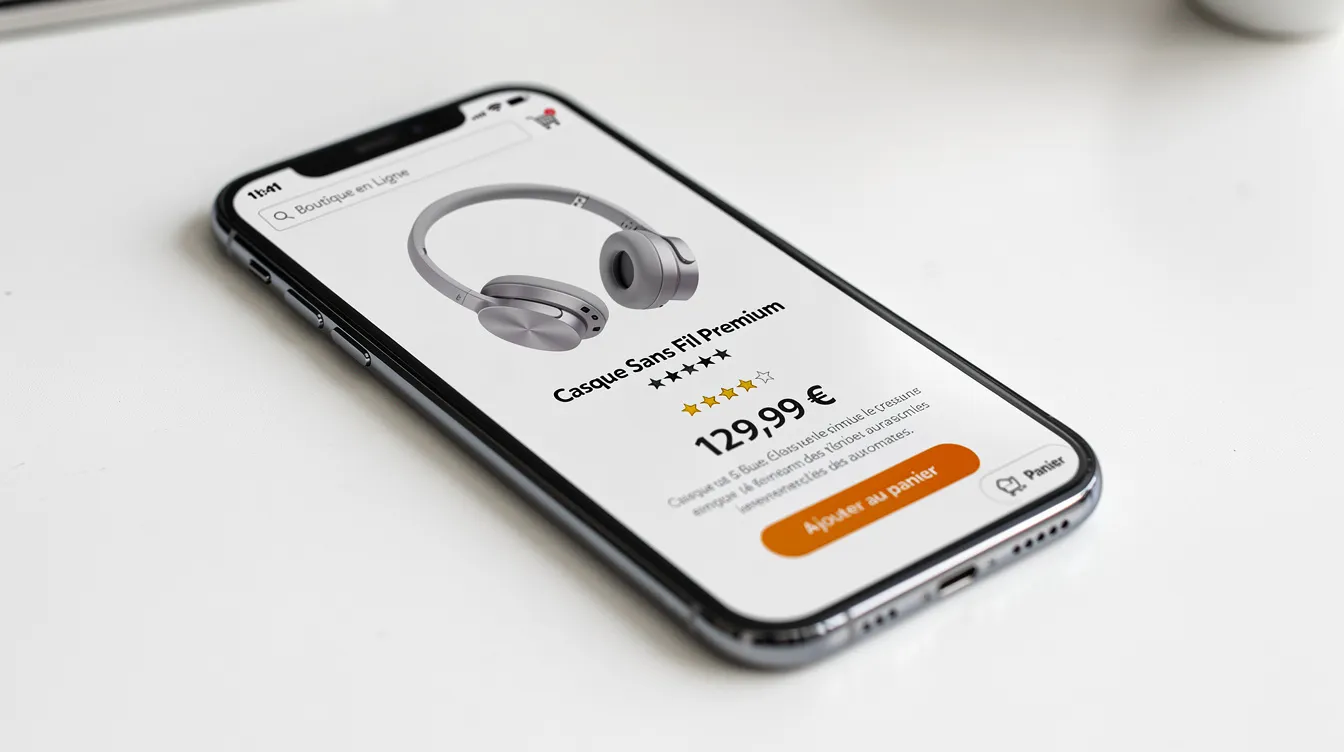
UX best practices:
- Clear navigation, with categories visible as soon as visitors arrive on the site
- Accessible and relevant filters
- Readable product pages with high-quality visuals
- Clear, well-placed calls to action
- Highlighted trust elements: reviews, return policy, delivery information
Loading speed matters too: a slow page drives visitors away and hurts search rankings. Image optimization, clean code, hosting suited to expected traffic: every technical detail matters, as does your website's security.
UnzipTech builds these requirements in from the start of development, with an agile approach and testing on different devices: smartphones, tablets and computers.
Search Engine Optimization (SEO) and Content
SEO is an essential lever for generating lasting organic traffic without paying for every click. Results take time, but they last.
The pillars of an e-commerce SEO strategy:
- Keyword research: target purchase-oriented queries, both local and more general.
- Optimized product pages: unique descriptions, concrete benefits, answers to objections, logistics information (delivery, returns).
- Editorial content: a blog with guides, comparisons and tutorials attracts visitors earlier in the buying decision, and feeds your social media.
- On-page SEO: optimizing the titles, tags, URLs and content of each page.
- Off-page SEO: backlinks, mentions and online reputation strengthen your domain's authority.
- Local SEO: useful if you also have a physical presence, to appear in nearby search results.
UnzipTech can integrate SEO from the website's design stage and support you over time.
Social Media and Digital Marketing Around Your Online Store
Social media complements your e-commerce website: it brings visibility, qualified traffic and a community.
Concrete actions to plan:
- Choose the right networks for your target audience: visual platforms for lifestyle products, professional networks for B2B, short video to reach a younger audience.
- Create engaging content: products in use, behind-the-scenes production, customer testimonials, demonstrations.
- Connect your website and social networks: share buttons, synchronized catalogs, dedicated campaign landing pages.
- Email marketing: transactional emails (confirmation, tracking) and relationship emails (newsletters, cart reminders) to build loyalty.
- Advertising and retargeting: paid campaigns on search engines and social media bring immediate visibility, alongside SEO.
Smart automation lets you segment your contacts, trigger automatic emails and personalize recommendations, even for a small business.
Organization, Obligations and Management Tools (ERP/CRM)
An e-commerce website is not just about the website itself: it affects the entire organization of the company (logistics, customer support, invoicing, inventory) and means rethinking some internal workflows.
Points to plan for:
- Personal data: consent, security, limited internal access, traceability of actions.
- Customer information: clear prices, delivery fees, return policy, general terms and conditions of sale.
- Mandatory pages: terms and conditions of sale, privacy policy and full company contact details.
An ERP or a custom CRM, among UnzipTech's services, centralizes inventory, orders, invoices, customer follow-up and reporting, and reduces manual data entry and duplicates.
For the legal framework that applies to your business, seek advice from a legal advisor or an accountant, in addition to technical support.
How UnzipTech Runs an E-commerce Website Project
UnzipTech applies the same method to every web development project, adapted to the specifics of e-commerce, in four steps:
- Listening and needs analysis: understanding your business, your products, your internal workflows, your goals and your constraints.
- Mockup design and approval: mockups are presented to and approved by the client before any development.
- Agile development: with regular check-ins and adjustments based on your feedback.
- Delivery, training and follow-up: training for your teams, user documentation and going live.
For each project, UnzipTech prepares a free personalized quote after analyzing your needs, with payment generally split into several phases. Maintenance and support contracts then make it possible to evolve and secure the website.
What you gain:
- A clear view of the schedule and deliverables
- Regular check-ins to adjust the project along the way
- Payment split into several phases
- Training and documentation with each delivery
- Post-launch follow-up to evolve the website
Checklist to Prepare Your E-commerce Website Project
You now know the main steps: strategy and positioning, platform choice, UX/UI design, development, SEO, digital marketing and internal organization.
To prepare your project:
- Clarify your offer: products, services, prices, target niche
- Prepare your content: high-quality product copy and photos
- Gather legal information: legal status, contact details, terms and conditions of sale
- Define your sales channels: your own website, social media, possibly marketplaces
- Set a realistic budget and timeline
FAQ About Creating an E-commerce Website
What is the difference between a showcase website and an e-commerce website?
A showcase website presents your company and services. An e-commerce website also lets you sell online: catalog, cart, ordering and payment.
Should you choose a SaaS, open source or custom solution?
It depends on your catalog size, your integration needs and your ambitions. Analyzing your needs makes it possible to choose the most suitable solution.
How much does an e-commerce website cost?
The cost depends on the features, integrations and volume of content. UnzipTech prepares a free personalized quote after analyzing your needs.
What happens after going live?
UnzipTech trains your teams and provides user documentation at delivery. Maintenance and support contracts are offered to evolve the website.
Do you have an online store project? 👉 Let's talk about your e-commerce project